

A server is a service provider that offers data, resources, and file sharing to clients on the network, designed for continuous remote access, having an uninterrupted internet connection and superior hardware features. In short, a server can be defined as an advanced computer with high processing power.
Servers can be used to manage a network, share files, or host databases.
Types of servers
What is a Tower server?
Tower servers can be defined as a computer enclosed in a vertical cabinet, designed to operate as a standalone server. Tower servers are similar in structure to desktop computers. The Tower server, also called a tower-type server, is designed in the form of a tower-style computer. Tower servers have advantages over other types of servers in several respects.
Advantages of the Tower server
The Tower server has a fast cooling feature.
The component density is kept at a minimum level.
It has scalable features.
An unlimited number of servers can be added to an existing network.
Disadvantages of the Tower server
Tower servers take up more space and are heavier compared to Rack or Blade servers.
Wiring in Tower servers is more complex and messy.
Tower servers contain more components, so they have more fans, which makes them produce more noise.
What is a Rack server?
The Rack server is more advantageous compared to other types of servers. It is the most ideal and suitable type of server for enterprise performance. Rack servers are the most commonly used among servers and ensure healthy and secure data exchange. Rack servers are also known as Rack Mounted servers.
In Romanian, they are called “servere de raft” or rack-mounted servers. Rack server models allow loading multiple servers into a single rack-mounted frame. They also manage enterprise data, thus functioning as a data center.
Rack-type servers allow enterprises to communicate with users as quickly as possible. Enterprises that want to purchase Rack servers must choose the model most suitable for their business. A correct choice of Rack server will bring maximum efficiency to the enterprise.
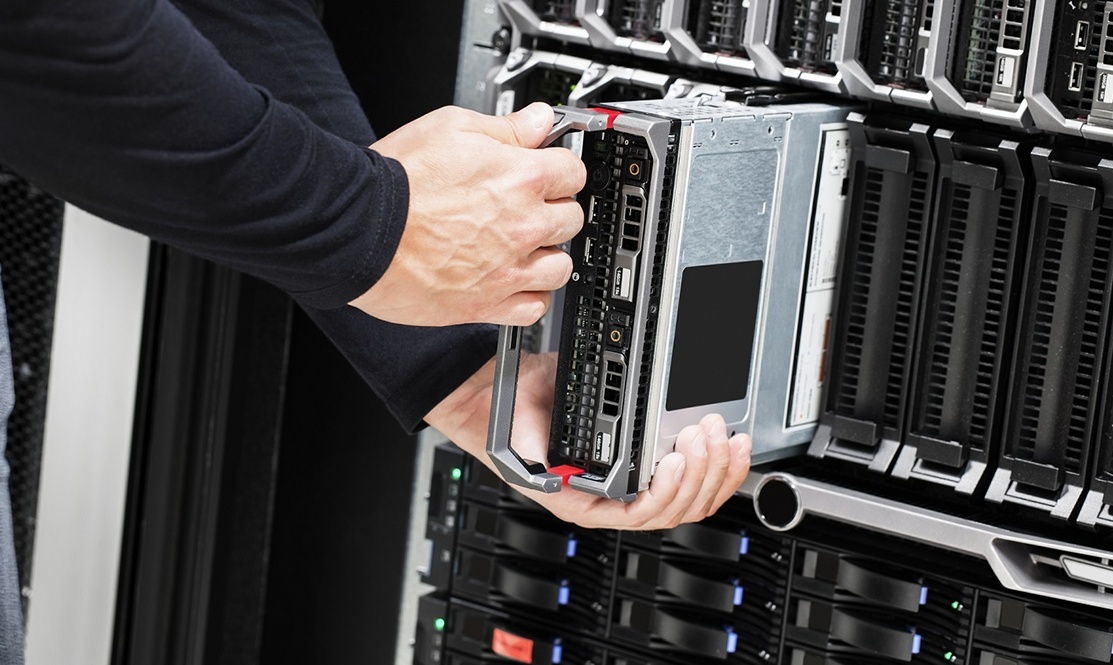
Avantajele serverelor Rack
Serverele Rack ocupă mai puțin spațiu comparativ cu alte tipuri de servere.
Sunt mai accesibile ca preț față de alte tipuri de servere.
Instalarea și montarea sunt mai ușoare decât la alte servere.
Cablajul și designul sunt mai simple și ordonate.
Dezavantajele serverelor Rack
Componentele serverului nu sunt răspândite pe o suprafață mare, deci configurarea lor este limitată.
Dimensiunile mici limitează foarte mult scalabilitatea ulterioară.
Componentele serverelor Rack sunt apropiate unele de altele, ceea ce face răcirea mai dificilă.

